
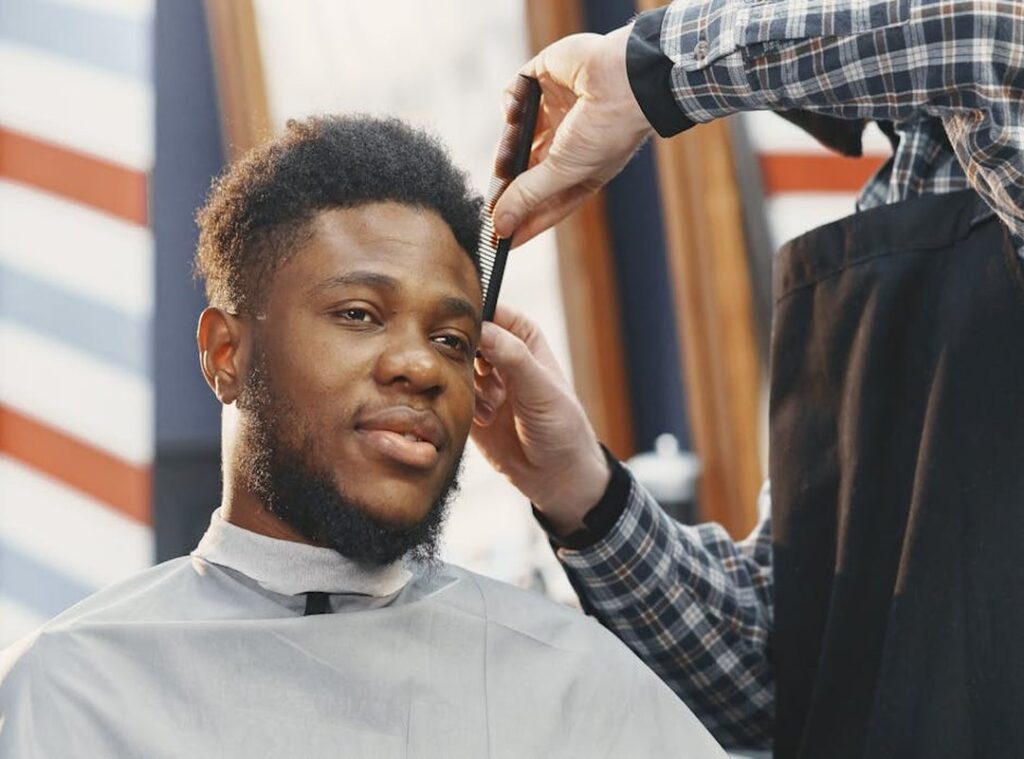
You know that feeling when you see a guy with a perfectly executed taper fade? Clean, sharp, and just right. It’s the opposite of those messy, undefined styles that look like they were done in the dark.
Finding a hairstyle that’s stylish, low-maintenance, professional, and modern can be a real challenge.
This guide is here to break it all down for you. From what a taper fade is to how to get the perfect one, we’ve got you covered.
We’re not just throwing out random tips. This guide is based on expert barber insights and an analysis of current style trends.
By the end, you’ll know if a taper fade is right for you and exactly how to ask for it. No more guessing or second-guessing.
Defining the Taper: More Than Just a Fade
Let me tell you a story. I once walked into a barbershop, and the guy next to me asked for a taper. The barber nodded, but I could see the confusion in his eyes.
He wasn’t sure if the guy meant a fade.
A tapered hairstyle is a gradual change in hair length that gets shorter from the top of the head down to the natural hairline. It’s more conservative and longer than a fade. A fade, on the other hand, is a higher-contrast style that blends down to the skin.
The key components of a taper include cleaning up the sideburns and the neckline. This creates a sharp, professional finish. It’s all about those clean lines.
Here’s the thing. A taper is not a single haircut. It’s a technique that can be applied to many different styles.
From short crew cuts to longer pompadours, a taper can make any style look polished.
I remember when I first got a taper. My barber took his time, making sure the transition was smooth. The result?
A neat, professional look that didn’t scream “look at me” like a fade might.
It’s important to see the difference. Side-by-side comparison photos really help. You can clearly see how a taper maintains more hair length and has a softer, more subtle blend compared to the high-contrast LOW:O7YP3_C1XPU= taper fade.
So, next time you’re in the chair, know what you’re asking for. A taper or a fade. They’re not the same, and understanding the difference can make all the difference in your look.
Trending Tapers: 4 Styles to Inspire Your Next Cut
You want a haircut that looks sharp and feels right. Let’s dive into the top taper styles you should consider.
The Classic Taper
The classic taper is a timeless, conservative look. It keeps hair longer on top and gradually shortens down the sides and back. Perfect for a professional setting.
Think of Ryan Gosling—his style is clean and polished, making it a go-to for many.
The Low Taper
If you prefer something subtle, the low taper is your best bet. The shortening begins very low, just above the ears and at the neckline. This adds polish without being too aggressive.
Idris Elba often sports this look, giving it a refined yet relaxed vibe.
The High Taper
For those who like a bit more drama, the high taper is the way to go. The shortening starts higher up on the head, creating a modern and bold silhouette. David Beckham is a great example.
His high taper is both striking and stylish.
The Taper for Curls/Texture
Curly or textured hair? A taper can beautifully shape and control it. By reducing bulk on the sides while showcasing the texture on top, you get a balanced, stylish look.
Jaden Smith rocks this style, showing how it can be both edgy and neat.
Pro tip: Always talk to your barber about the low:o7yp3_c1xpu= taper fade. It’s a versatile choice that can work with any of these styles.
Choose the one that fits your personality and lifestyle. Trust me, you won’t regret it.
Will a Taper Work for You? A Guide to Hair Type and Face Shape
Tapers are a versatile style, but they’re not one-size-fits-all. Let’s break it down.
Hair Type Suitability:
Tapers are excellent for thick hair to manage bulk. They can also be adapted for finer hair to create structure. Just make sure the cut is tailored to your specific hair type.
Face Shape Complement:
For round faces, a taper with volume on top can add length. It can also soften the angles of a square face.
If you have a long or rectangular face, avoid a very high taper with too much volume. Go for a lower, more balanced taper instead.
Oval faces are highly versatile and can suit almost any type of taper, from low to high. Lucky you!
Lifestyle and Maintenance:
A sharp taper fade requires regular barber visits (every 2-4 weeks) to keep it looking clean. If you’re busy, consider a lower maintenance style.
Think about your lifestyle. If you’re always on the go, maybe a low-maintenance cut is better. But if you can commit to frequent trims, a sharp taper could be perfect.
Pro tip: Regular trims are key. Find a good barber and stick with them. Consistency is everything.
In the end, the right taper is all about balance. Consider your hair type, face shape, and how much time you want to spend on upkeep.
And hey, if you’re into gaming, check out some tips on building strong relationships with investors. It’s all about making smart choices, whether in your hair or your business.
The Barber Conversation: How to Get the Exact Taper You Want
Let me tell you a story. I once walked into a barbershop, thinking I knew exactly what I wanted. But when I tried to explain it, my barber looked at me like I was speaking another language.
That’s when I learned the number one rule: always bring reference photos. A picture eliminates confusion and ensures you and your barber are on the same page.
Now, let’s talk about some key terms. When you ask for a taper, you’re looking for a gradual decrease in hair length from top to bottom. A fade is more dramatic, with a sharp transition from short to longer hair.
Be specific about where you want the taper or fade to start. Do you want it low, mid, or high? This makes a big difference in the final look.
Don’t forget to specify the length. Tell your barber exactly how long you want it on top. For example, “a finger’s length on top.” And be clear about the bottom too.
Say, “tapered down to the skin at the neck.”
The neckline is crucial. You have three main options: blocked/squared, rounded, or tapered/natural. I recommend a tapered neckline for the best-looking grow-out.
It looks more natural as your hair grows back.
Before the cut begins, have a quick consultation with your barber. Confirm the plan. Make sure you both understand what you want.
Remember, communication is key. If you follow these tips, you’ll get the exact LOW:taper fade you want.
Your Next Step to a Sharper, Cleaner Look
You now fully understand what a tapered hairstyle is, the different types available, and whether it’s the right choice for you. A taper is the perfect solution for a polished, versatile, and modern haircut that can be customized to any personal style.
Find a reference photo of a taper fade you love and book an appointment with a trusted barber. You’re now equipped with all the knowledge you need to walk out of the barbershop with your best haircut yet.